Enhancing Airfield Safety with a New FOD Box
- Airfield Line Marking and Runway Maintenance Services
- Airports and Airfields

Why Electric Vehicle Charging Infrastructure Matters:
Powering Sustainable Transport Networks

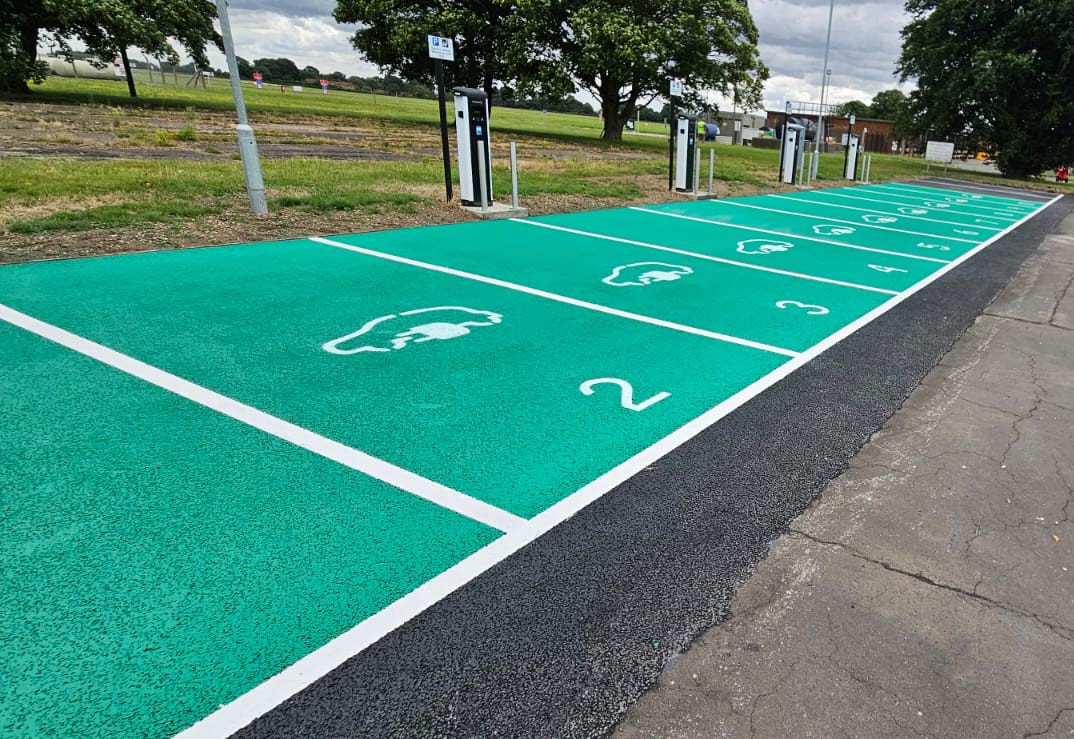
Electric vehicle (EV) charging infrastructure is no longer an emerging trend but an essential component of modern transport planning. As the UK government drives forward with net zero targets, the need for reliable and accessible EV charging points has become critical. Civil engineering contractors play a central role in ensuring that charging infrastructure is safe, resilient, and seamlessly integrated into existing networks.
The Importance of EV Charging Infrastructure
The growth of electric vehicles across the UK has been rapid, with adoption accelerated by legislative measures, financial incentives, and public demand for sustainable alternatives. However, without a robust charging network, uptake will stall. Installing infrastructure requires careful planning, incorporating power supply, groundworks, drainage, and accessibility considerations.
The service extends beyond placing charging units. It includes site preparation, cabling, surfacing, signage, and long-term maintenance. Each installation must adhere to electrical safety standards, highway regulations, and accessibility requirements under the Equality Act 2010. This makes professional civil engineering expertise essential to ensure compliance and reliability.
Applications Across Different Environments
Benefits and Industry Insights
Key benefits include:
Industry insights highlight the transition towards ultra-fast charging technology and smart energy management. Integration with renewable energy sources, battery storage, and grid balancing systems is reshaping how EV infrastructure is designed and delivered.
Challenges Addressed by EV Infrastructure
Widespread adoption of EVs faces challenges such as range anxiety, charging availability, and capacity of the power grid. Civil engineering contractors mitigate these issues by designing installations that balance demand, improve accessibility, and maximise efficiency. Flood-resistant designs, vandalism protection, and careful location planning all contribute to resilient infrastructure.
Electric vehicle charging infrastructure is a cornerstone of the UK’s net zero ambitions. It underpins sustainable transport by enabling widespread EV adoption, creating future-proof facilities, and ensuring compliance with safety and accessibility standards. Jointline’s civil engineering expertise provides the assurance that EV infrastructure projects are delivered with precision, resilience, and long-term value.